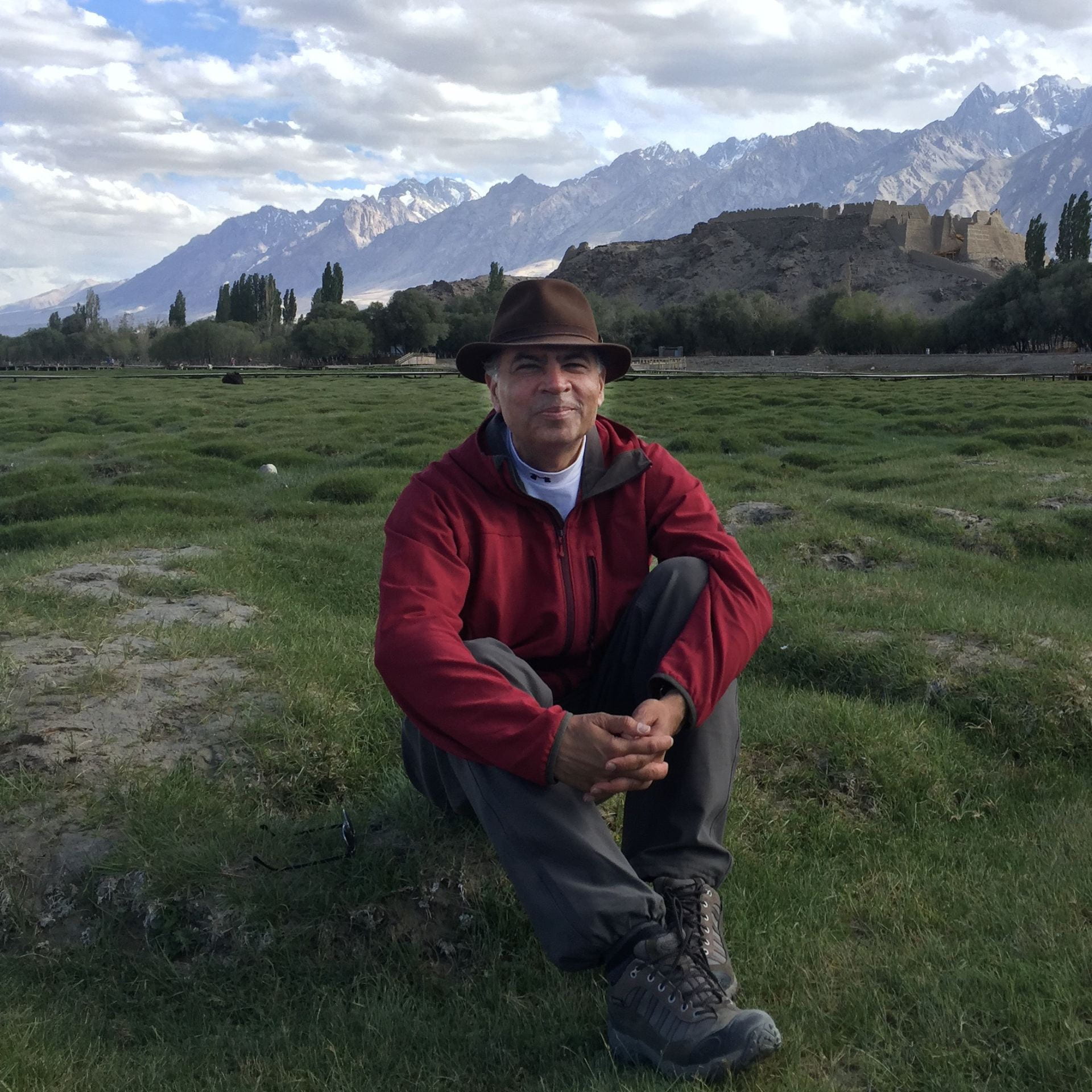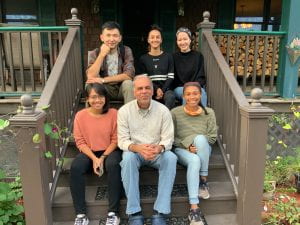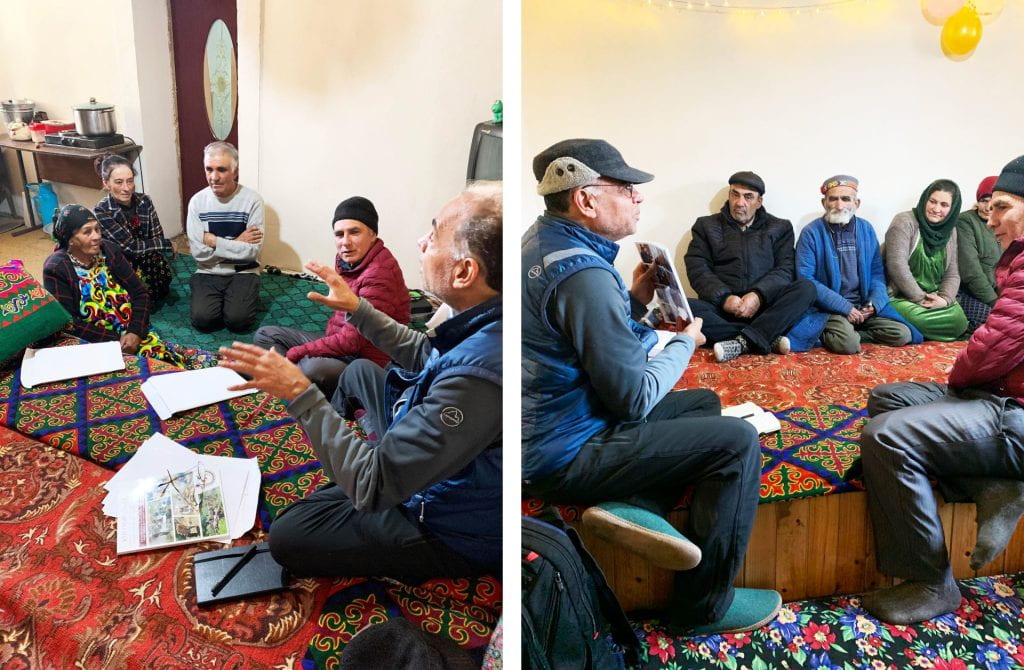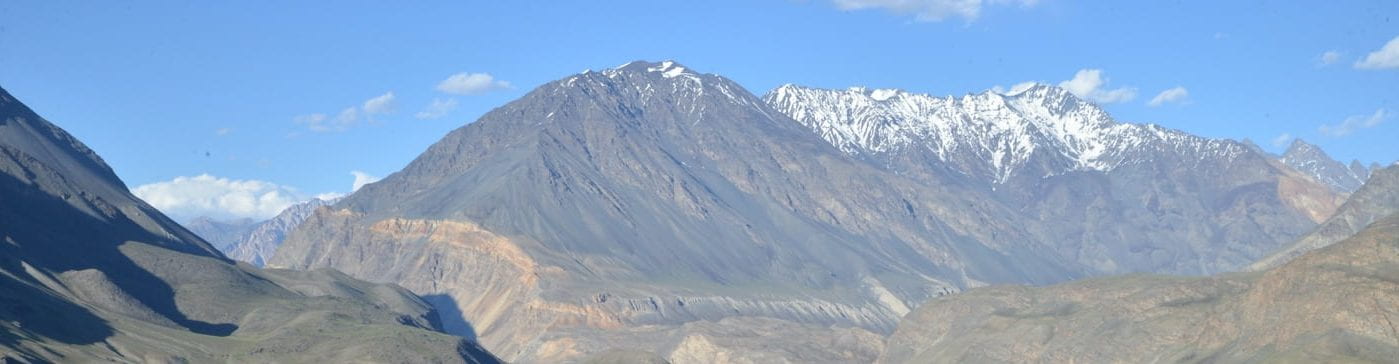
Our research group conducts human ecological research in partnership with indigenous peoples and local communities. We seek to innovate policy and practice in civil society by re-envisioning paradigms that are failing. Our current research efforts coalesce around areas of high altitude and latitude where ecological and socio-cultural change are critically affecting food, health, energy, and water sovereignty. Through participatory research, we incorporate qualitative and quantitative techniques from the social and biophysical sciences as well as the humanities. We take a pluralistic approach, recognizing that effective solutions are based on multiple epistemological paradigms. We assert that indigenous knowledge helps to conserve biocultural diversity in ways that are beyond the reach of single-disciplinary approaches. By supporting communities as they anticipate and respond to change, we engage complex ethical and policy challenges of the 21st century.
Current Graduate Students
Advisor of Michelle Baumflek, PhD student: Michelle's research focuses on interconnections between plants and people. She is interested in the role wild plants can play in issues of health sovereignty and cultural identity. Michelle has recently completed a two year study of contemporary use and changing access to gathered plants in Maine. Her PhD research is a continuation of this work. In collaboration with two Native American tribes in northern Maine, Michelle will develop culturally-appropriate management plans for wild plants which take social and ecological factors into account.
Advisor of Samar Deen, PhD student: Samar's research will focus on management of non-timber forest products and the impact of current practices on biodiversity in the Guraze Valley, in Pakistan-occupied Azad Jammu and Kashmir. She intends to determine sustainable extraction rates for medicinal plants and use spatial analysis to study resource use and conflict between communities and wildlife within Musk Deer National Park. Samar is currently consulting for the World Bank, South Asia, Governance Sector, as a data-analyst for health-related e-monitoring interventions. She will join the research group in 2013.
Advisor of Rajeev Goyal, MPS student: Rajeev’s research focuses on strategies for countering the effects of land fragmentation in eastern Nepal. Secondary to the expansion of road infrastructure in the rural hills, land prices have escalated, causing the conversion of diverse habitats into building sprawl. Rajeev is examining how a network of government schools in the eastern hills can serve as a land trust for biodiversity education. Rajeev, who holds a law degree, is the co-founder of LearningGrounds.org, and author of The Springs of Namje (Beacon, 2012).
Advisor of Murodbek Laldjebaev, PhD student: Murodbek is interested in energy security and
energy sovereignty in the context of Tajikistan. His research links energy
sovereignty to food, health and water sovereignty and explores relationships between energy, water, food, gender and climate. Murodbek has a Masters in Public Policy from the National
University of Singapore. He has worked in
teacher education in rural Tajikistan, consulted the World Bank on pre-service education, and worked for the Ministry of Economic Development of Trade on Tajikistan’s accession to the WTO.
Advisor of Chuan Liao, MS/PhD student: Chuan's research interests focus on resource use patterns, livelihood security, and risk analysis in pastoralist systems. He conducts his fieldwork in communities with diverse biocultural contexts in the Altay Mountains and the Tian Shan Mountains of Xinjiang, China. Using mixed methods and a human ecological lens, his MS research examines migration patterns, livelihood strategies, and risk perceptions. He is also exploring the options for conservation and sustainable development for pastoralist systems.
Advisor of Morgan Ruelle, MS/PhD student: Morgan's dissertation focuses on indigenous ecological knowledge, plant diversity, food sovereignty, and climate change in the Semien Mountains of Ethiopia. Morgan conducted his Master's thesis research with elders in the Standing Rock Nation (North & South Dakota), where he worked with tribal agencies and organizations to document phenological knowledge and expand local markets for plants that are used in indigenous foodways. Morgan's research is supported by the Food Systems and Poverty Reduction IGERT at Cornell.
Advisor of Jeffrey Wall, MS/PhD student: Jeffrey conducts farmer-centered research that examines agricultural ecology, biocultural diversity, crop genetic resource conservation and food insecurity. Jeffrey's Masters of Professional Studies thesis evaluated the cultural and financial importance of chestnut production in two villages in Azerbaijan where the recent arrival of chestnut blight, Cryphonectria parasitica, threatens significant damage. By coordinating local NGOs and scientific institutions, he arranged for characterization of the fungus, an important first step toward biological control.
Past Graduate Students
- Advisor of Nicole Wilson, MS student at Cornell University, Thesis Topic: Human Ecological Dimensions of Change in the Yukon River Basin: A Case Study of the Koyukon Athabaskan Village of Ruby, AK. In collaboration with the Yukon River Inter-tribal Watershed Council, her research examines the implications of climate change for the subsistence livelihoods of Alaska Native Tribes and First Nations in the Yukon River Basin, including the role of indigenous knowledge and institutions in facilitating adaptation to change (Graduated 2012).
- Supervised Robert A. Hawkesworth, Master of Arts (MA), Thesis Topic:
Evaluating Community Participation in an Action Plan to Decrease Homelessness in Calgary, the Resources and the Environment Program, Faculty of Graduate Studies, University of Calgary. Calgary Alderman Bob Hawkesworth successfully completed his dissertation and defense evaluating the most adequate methods to promote participation by all stakeholders in reducing homelessness in the city of Calgary (Graduated 2003).
- Supervised Darwin Peter Bateyko, Master’s Degree Project (MDP), Thesis Topic: Evaluating Co-Management: A Framework for Analysis, Faculty of Environmental Design, University of Calgary. Mr. Bateyko examined the role of co-management of natural resources in aboriginal northern communities as a result of Land Claim Agreements. Undertaken in partnership with Sahtu Renewable Resources Board, this research is intended to have real and practical impact on the governance structures of the Sahtu Land Claim Agreement (Graduated 2003).
- Committee Member/Examiner of Jennifer McKillop, Master’s Degree Project (MDP), Thesis Topic: An Approach to Land Management and Development:
Assessment for Fort McKay First Nation, Faculty of Environmental Design, University of Calgary. Dr. Kassam's responsibilities involved assignment of readings and engaging the student in critical discussion. Time was spent concentrating on methods used for collecting indigenous knowledge and methodology for aboriginal community participation in research (Graduated 2002).
- Committee Member/Examiner for Frederick McDonald, Masters of Fine Arts (MFA), Topic: Ancestral Portraits, Faculty of Fine Arts, University of Calgary. Mr. Frederick McDonald is a Native Cree artist from Northern Alberta. Dr. Kassam’s contribution included assisting Mr. McDonald in asking questions such as: what is the role of representation in art, how does art challenge stereotypes and cultural imperialism, and what is the role of cultural identity in art? Frederick McDonald successfully defended his dissertation and exhibition at the Banff Centre Gallery.
The dissertation he wrote became a book published by the University of Calgary Press to which Dr. Kassam wrote the introductory preface (Graduated 2002).
- Mentored Sean K. Maher, Murray Fraser Graduate Research Assistant to the Murray Fraser Professor of Community Economic Development (1998-2000). Dr. Kassam assisted Mr. Maher in his studies and worked with him in developing his research and teaching profile. Mr. Maher contributed to Dr. Kassam’s various research projects. He is currently completing his doctorate at the University of Cambridge, UK.
Past Visiting Fellows
- Advisor of Umed Bulbulshoev, Visiting Fellow at Cornell (Fall 2010): Umed is a linguist who studies the interconnections between language, culture and human ecology. He believes that as indigenous languages are lost, knowledge related to the preservation of biodiversity and adaptation to change are lost as well. Umed’s research focuses on Pamiri languages spoken in the mountainous Badakshan region of Tajikistan and Afghanistan including Shugnani, Rushani, Ishkashimi, and Wakhani. Umed co-wrote a paper about indigenous calendars entitled, Ecology of Time: Calendar of the Human Body in the Pamir Mountains.
- Advisor of Munira Karamkhudoeva, Visiting Fellow at Cornell (Spring 2010): Munira is an entomologist who works in the Pamir Mountains of Afghanistan and Tajikistan. Her current work focuses on medicinal plants and plant diseases, and involves social as well as biological components. A member of the Pamir Biological Institute, Munira has previously researched whiteflies associated with failing potato harvests in Afghanistan. Munira co-wrote a paper about the importance of medicinal plants in the Pamir Mountains entitled, Medicinal Plant Use and Health Sovereignty: Findings from the Tajik and Afghan Pamirs.
Past Undergraduate Honours Students
-
Supervised Sherry Martin, Honour's Student at Cornell University. Thesis Topic: Indigenous Knowledge for Conservation of Natural and Cultural Resources: A Case Study in the Wet Tropics World Heritage Area of Far North Queensland. Ms. Martin was a double major in in Biology & Society and Natural Resources (Graduated 2011).
-
Tara Collins completed her Bachelor of Arts in Development Studies (Honours) at the University of Calgary. Her thesis examined how renewable energy opportunities have been transformed and made local through transformation and adaptation processes in Canadian communities. She gained an understanding of how community participation and adaptive capacity can inform the development, local ownership and overall sustainability of such opportunities. Her thesis also investigated how these processes may be useful for other remote communities in crisis, with a particular focus on the Pamir Mountains of Tajikistan (Graduated 2006).
-
Supervised May Mah, Honours Thesis, Topic: Canadian Development Assistance and Human Rights in China, Development Studies Programme, Faculty of Communication and Culture, University of Calgary. Successfully completed with First Class Honours in Development Studies, Ms. Mah’s research evaluated development assistance by the Canadian International Development Agency (CIDA) and its stated policy towards human rights in China (Graduated 2002).
Past Undergraduate Research Assistants
-
In the Summer of 2006 Lesley Campbell, Tara Collins, Jeffery Halvorsen and Heath McLeod joined Dr. Kassam on the following projects:
- Social Impact Assessment of a resource development project. The project explored the impact on First Nation and non-First Nation communities in Yukon and northern British Columbia.
- Project planning trip to Afghanistan and Tajikistan to look study the link between Biological and Cultural Diversity
- Publishing an edited book with the working title: “Understanding Terror: Canadian Perspectives”
- Lesley Campbell is completing an after degree program majoring in Development Studies. She holds a double major in Anthropology and History from the University of New Brunswick. Her research interests include climate change and the role of social action in increasing public awareness (2006).
- Tara Collins completed her Bachelor of Arts in Development Studies (Honours) at the University of Calgary. Her research interests include collaborative community planning, renewable energy, green building and issues of social equity and diversity. In 2005 she spent four months in Zambia working with subsistence farmers on conservation farming, micro-irrigation and market access (2006).
- Jeffery Halvorsen completed his Bachelor of Arts in Development Studies (Honours) at the University of Calgary. His research interests include the role of journalism in democracy and the role of stakeholder theory in creating relationships between corporations and NGOs to form a socially conscious private sector (2006).
-
Heath McLeod holds a Bachelor of Arts in Development Studies with a minor in History from the University of Calgary. His research interests include the use of satire for increasing awareness of social issues. He was awarded a Canadian International Development Agency (CIDA) internship with Mines Action in The Republic of Georgia (2006).
Listed below are internship projects of Dr. Kassam’s Northern Planning and Development Studies Students (NPDS) which were geared to integrate their Major with the NPDS programme:
- Supervised Individual Internship Project (NPDS 500) for Renita Schuh (BA Canadian Studies). Renita Schuh’s work involved establishing an organization structure for a local NGO based at Kenya University to find professional and experiential learning opportunities for African students (2003).
- Supervised Group Project Internship (NPDS 400) for Tavis Baubier (BA Development Studies). Tavis Baubier worked with the Government of Northwest Territories. His role was to review the process of negotiating the devolution of natural resources and environment programs from the Federal Government to the Yukon Government. Then undertake an analysis of the Yukon devolution experience and identify key issues and lessons learned. He subsequently reported these findings to the Government of the Northwest Territories. His work contributed to policy formulation in the North (2002).
- Supervised Individual Internship Project (NPDS 500) entitled "Tlicho Ko -
Dogrib House" for Ouri Scott (General BA with Minor in Architecture). Ms. Scott prepared an architectural design for building a meeting place for the Dogrib First Nations Government in Rae Edzo, Northwest Territories in anticipation of the ratification of the Dogrib self-government agreement with the Federal government (which occurred in 2004). She successfully presented her design to a committee consisting of two professors of architecture (Dr. Lee and Dr. Hamel from the Faculty of Environmental Design), a professor of urban studies (Dr.
Felske), and two professors of native and heritage studies (Dr. Devine and Dr. Wetherell) (2002).
- Supervised Group Project Internship (NPDS 400) for Stephanie Sanders (BA Distinction, Geography) and Adam Gagnon (BA Geography). Ms. Sanders and Mr. Gagnon raised $16,000 and undertook a Youth Conference entitled Bridging the Gaps: The Role of Youth in Sustainability. 120 University and senior level High School Students attended the three-day conference at a campsite. Representatives of the Government, private sector, academic and NGO institutions participated and made presentations (2001).
- Supervised Group Project Internship (NPDS 400) for Hugh Moloney (BA
Geography) and Margaret Holroyd (BA Development Studies) who researched for and developed an educational video on alternative means of transportation within the city of Calgary with an emphasis on the use of a bicycle (2001).
- Supervised Group Project Internship (NPDS 400) for Kendra Ramdanny (BA Distinction, International Relations) developed a consultation strategy for Aboriginal community involvement in oil and gas development. This strategy will be used by field staff and management at British Petroleum Canada to undertake community consultation with Aboriginal people in Alberta (2001).
- Supervisor Group Project Internship (NPDS 400) for Megan Thompson (BSc.
Ecology) who organized and participated in a Workshop on the Human Ecology and the impact of Chemical Pollutants Project. This workshop discussed research outcomes of the Human Ecology project and determined steps for dissemination and communication of information as well as broad policy action. Community members from indigenous Arctic marine communities from Alaska, Russia and Canada; research scientists and graduate and undergraduate students participated (2001).
- Supervised Individual Internship Project (NPDS 500) for Heather Clitheroe (BA English) who wrote a novel based on factual events and legal transcripts of a shooting of an Aboriginal family in a reserve.
Dr. Kassam’s role was to provide an enabling environment for creative freedom and discuss the role of culture in colonization and de-colonization. Ms. Clitheroe won the Alberta Arts Foundation Award for the published novel entitled A Different Kind of War (2000).
- Supervised Group and Individual Project Internship (NPDS 400 and 500) for Darwin Bateyko (BA Sociology), Jennifer Cardiff (BA Anthropology), Robert Earley (only NPDS 500) who undertook Human Ecology Project research in the Inupiat community of Wainwright, Alaska. They participated in the development of a literature review, interview protocols, training manual for community researchers. The community researchers along with the students undertook 50 interviews and developed traditional marine and land-use maps (1999/2000).
- Supervised Group and Individual Project Internship (NPDS 400 and 500) for Marie Darbousset (BA Development Studies) on Women’s Empowerment research in the Dene and Metis community of Hay River, NWT. She participated in the development of a literature review, interview protocols, and training manual for community researchers. Ms. Darbousset with Dr. Kassam undertook field work, lived on the reserve and worked in Partnership with the Soaring Eagle Friendship Centre in the town of Hay River. 40 interviews were undertaken by 3 trained community researchers, Ms. Darbousset and Dr. Kassam (1999/2000).
- Supervised Individual Internship Project (NPDS 500) for Shelly Kovalench (BSc. Geography) who worked with Resource Development Corporation to construct a GIS summer range and habitat map for the reindeer herd on the Tuktoyaktuk Peninsula. In order to do this effectively, Shelly took part in reindeer herding in the Beaufort Delta (1999).
- Supervised Group Project Internship (NPDS 400) for Shelly Kovalench and Robert Earley (BSc. Environmental Sciences) who developed a “Green Map” of the City for the NGO Sustainable Calgary. In addition, they made a video, as a result of a Learning Commons Fellowship, to raise awareness on sustainability issues in Calgary. This video is being used for educational purposes (1999).
- Supervised Group Project Internship (NPDS 400) for Heather Clitheroe who developed the Journal Arctic index for key word searches for use by students and researchers alike (1999).
- Supervised Group Project Internship (NPDS 400) for Shawn McCann (BA Canadian Studies) who worked with the Storefront for Voluntary Agencies to create a Youth Advisory Council. Ms. McCann’s role was to develop models for Youth Wellness and the participation of youth in governance and social development issues in Yellowknife, Northwest Territories. She also worked towards establishing a Youth Council consisting of indigenous and non-indigenous students (1999).
- Supervised Group and Individual Project Internship (NPDS 400 and 500) for Ciara McNiff (BA Communications) and Bonnie McCluskey (BSc.
Anthropology, BA Canadian Studies) who undertook Human Ecology Project research in the Inuvialuit community of Holman, Northwest Territories.
Participated in the development of a literature review, interview protocols, training manual for community researchers. The community researchers along with Ms. McNiff, Ms. McCluskey and Dr. Kassam undertook 38 interviews and developed traditional marine and land-use maps (1999/2000).
- Supervised Individual Internship Project (NPDS 500) for Heidi Hoernig ( BA Distinction Anthropology, BA Distinction Geography) who chaired a national conference, "Community Development from the Inside Out", which was held on August 21 and 22, 1998. The conference brought together representatives of communities, government, industry and post-secondary institutions to discuss the practical issues involved in traditional knowledge applications in community development. Speakers represented communities and organizations from the three northern territories as well as British Columbia, Alberta and Saskatchewan. Presentations covered case studies that involved renewable resource management, youth and child care, tourism, governance, language preservation, music, social development, co-management, First Nations, academia and participatory action research projects. The conference was a huge success gaining national recognition. It also enabled various indigenous communities to discuss among other indigenous people, government, researchers and individual citizens issues that are of importance relating to community development (1998).
- Supervised Group Project Internship (NPDS 400) for Chris O’Neil (BA Political Science), Karin Clark (BSc Ecology), and Jana Zavitz (BA Geography) who co-authored a book titled Breaking Ice with Finesse, which tells the fascinating story of pioneering energy exploration in the Beaufort Sea region of the Northwest Territories. This book documents the environmental, socio-economic and technical achievements of that exploration. These students designed the research methodology and conducted both the primary and secondary research (1997).